|
|||||||||
| :: Opinions > Other Opinions | |||||||||
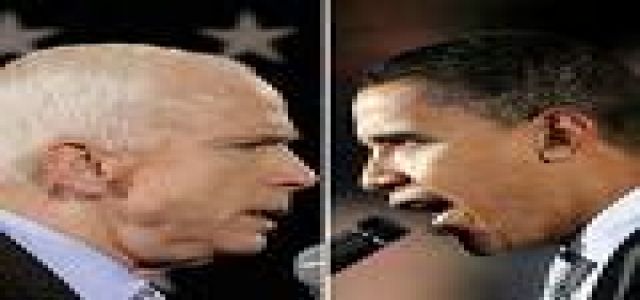
How should US foreign policy change?
The image of the US around the world has sharply deteriorated since the start of the war in Iraq, but the latest Pew Global Attitudes survey found that people in a number of countries believe US foreign policy will change for the better after the presidential election.
|
|||||||||
| Sunday, September 28,2008 12:37 | |||||||||
|
|||||||||
|
The image of the US around the world has sharply deteriorated since the start of the war in Iraq, but the latest Pew Global Attitudes survey found that people in a number of countries believe US foreign policy will change for the better after the presidential election. For the first Dominique Moisi, founder and senior adviser at the French Institute for International Relations (Ifri). From Clearly, if the next Obama would be more in tune on diplomatic and strategic matters with the Europeans, though not necessarily on economic matters, where Democrats tend to be more protectionist. But in terms of political culture, there would suddenly be a gap between Obama"s Suddenly There is also a major debate in Should Nato continue to enlarge its mission or should it return to its old mission, given the return of Clearly there"s a difference between the global vision of The majority of French people, as well as the majority of European people, are clearly pro-Obama, partly because they are anti-Bush and they see Obama as the candidate of change. But there is also a certain element of esteem for McCain. Zhu Feng, deputy director of the Center for International and Strategic Studies, Peking University, While Chinese-American relations improved under the Bush administration and the government of Hu Jintao, President Bush remains a very controversial figure in the eyes of the Chinese people - most especially for the doctrine of pre-emption. After 9/11 Bush proclaimed that the world had changed. Now the Chinese are wondering whether the next Perhaps more important than his world view, the next US president will have to stabilise financial markets, deal with a weakened US dollar, high oil prices and the threat of recessionary world markets. The Bank of China has invested heavily in In the past, presidential candidates seem to have promised starkly different visions for dealing with The Chinese know that policy is more important than personality. In the past, The Bush administration"s two terms laid out some very useful foundations for future US-Chinese relations - including the Strategic Economic Dialogue. Ensuring that these continue and improve is more important than the particular occupant of the White House. Natalia Narochnitskaya, head of the Paris branch of Russia"s Institute of Democracy and Co-operation. The The next president should abandon the double standard, whereby the He should try to get the He should break with He should stop inventing conflicts every couple of years. The The next president should understand that In the light of the recent crisis in the Professor Sir Lawrence Freedman, vice-principal of King"s College, The The country has far less economic tolerance than before for the sort of falls in the dollar or rises in oil price that might accompany a major conflict. Moreover, there is much unfinished business. In all of these areas dramatic shifts in policy - in either more hawkish or dovish directions - are going to be difficult to implement. Nor should one ignore the time it takes for a new president to get his bearings and his team in place. Yet despite the widespread view that international power is now shifting away from the Countries look to The next president will have an international community anxious for a fresh start. The best advice: stay calm; do nothing rash; avoid commitments that cannot be backed up but also the impression that you are a soft touch; talk to anyone who has something to offer; work to build the country"s bruised reputation and financial position, and to reduce its energy dependence. And keep in mind that, whatever the intent, some big crisis will still hit you from an unexpected direction. Ahmed Rashid, author of Descent into Chaos: How the war against Islamic extremism is being lost in Pakistan, The This anti-Americanism, generated by President Bush"s policies, is responsible for making many Muslims suspicious of democracy, human rights, political and media freedoms - which are now associated with US policy rather than with international human values. The threat of Islamic extremism needs to be addressed in a much more holistic manner, in order to curb the spread of al-Qaeda and the Taleban in The regional crisis in South and The next The initiative must be accompanied by an economic aid package that treats the region as an economic unit, to build infrastructure, trade and jobs and tackle the burgeoning heroin industry. The next Professor Samuel Schmidt, director of North American studies at El Colegio de President Bush is seen as someone who never paid attention to I would like the next president to consider moving towards integration in the European sense - not to look at For example, we have not resolved the most important environmental issues between the two countries. The We don"t have any deal on how to handle the supply of underground water that most of the cities in the desert get their water from. Also, the next However, immigration has not been a big issue for voters in this campaign. The candidates know that and they have been avoiding it. The The European community is now looking to have more political and economic leverage in So I would like to see the Dr Maha Azzam, associate fellow, Middle East programme, Royal Institute for International Affairs. It is a cliche but in reality, the But for the majority in the On democratisation, I would say progress has been negligible. In If Barack Obama pursues the line that he is willing to talk to the enemies of the US, then obviously that would raise a level of hope in the region that we may have a new US president who isn"t as antagonistic towards Iran, and in turn towards Syria and others. That would be an important gesture; however he will probably want to pursue a line that will reassure US citizens that he is more in the Bush mould - "Yes, I may offer a new face to What the peoples of the region want from the next When it comes to the issue of Professor Adam Habib, deputy vice-chancellor of the University of There are two or three major challenges for the Firstly, in a lot of ways the For the The If we are committed to African development and alleviating African poverty, then we have got to avoid such proxy wars. That"s absolutely crucial. Another problem is that the militaristic approach of the As an African, I would want to see a foreign policy that advances trade and aid, that stabilises the continent and facilitates poverty alleviation and development - and that does mean a fundamental rethink on the war against terror. This foreign policy must be less arrogant, more oriented towards a partnership. The
|
|||||||||
|
Posted in Other Opinions |
|||||||||
|
|||||||||
|
|
|||||||||
| Related Articles | |||||||||
|
|
 Back to Homepage


 Facebook
  Digg
Digg  Yahoo
Yahoo  Del.icio.us
  reddit
  StumbleUpon
  Mixx
Mixx  Google


Twitter
Facebook
Most Viewed
Join Our Maillist
Video


|
© The Muslim Brotherhood All copyright and re-transport from the site of any material are allowed as long as the source mentioned |
