|
|||||||||
| :: Issues > Human Rights | |||||||||

The charges against the Egyptian government for violations of Human Rights
The present report is a summary of 37 stakeholders’ submissions1 to the universal
periodic review. It follows the structure of the general guidelines adopted by the Human
Rights Council. It does not contain any opinions, views or suggestions on the part of the
Office of the United Nations High Commissioner for Human Rights (OHCHR), nor any
judgement or determination in relation to specific claims.
|
|||||||||
| Sunday, January 31,2010 20:01 | |||||||||
|
|||||||||
|
But how useful, or useless is UN Human Right Council!! Human Rights Council Working Group on the Universal Periodic Review Seventh session Geneva, 8-19 February 2010 Summary prepared by the Office of the High Commissioner for Human Rights, in accordance with paragraph 15 (c) of the annex to Human Rights Council resolution 5/1 Egypt* The present report is a summary of 37 stakeholders’ submissions1 to the universal periodic review. It follows the structure of the general guidelines adopted by the Human Rights Council. It does not contain any opinions, views or suggestions on the part of the Office of the United Nations High Commissioner for Human Rights (OHCHR), nor any judgement or determination in relation to specific claims. The information included here in has been systematically referenced in endnotes and, to the extent possible, the original texts have not been altered. Lack of information or focus on specific issues may be due to the absence of submissions by stakeholders regarding these particular issues. The full texts of all submissions received are available on the OHCHR website. The report has been prepared taking into consideration the four-year periodicity of the first cycle of the review. * The present document was not edited before being sent to the United Nations translation services. United Nations A/HRC/WG.6/7/EGY/3 General Assembly Distr.: General 25 November 2009 English Original: English/French A/HRC/WG.6/7/EGY/3 2 GE.09-17415 I. Background and framework A. Scope of international obligations 1. National Council for Human Rights (NCHR) highlighted that Egypt pledged to accede to the CED.2 NCHR3 and Fédération Internationale des Ligues des Droits de l’Homme (FIDH)4 called on Egypt to ratify the OP-CAT. NCHR5 called in particular for Egypt to withdraw its reservation to article 2 of CEDAW, and Joint Submission (JS)1,6 JS67 and FIDH8 called on Egypt to ratify OP-CEDAW. JS7 added that Egypt should ratify ICCPR-OP 1 and ICCPR-OP 2, the OP-CRPD and the Rome Statute of the ICC.9 JS5 recommended that Egypt remove its reservations to various socio-economic rights in the Convention relating to the Status of Refugees.10 B. Constitutional and legislative framework 2. Freedom House (FH)11 and the International Commission of Jurists (ICJ)12 indicated that Egyptians have been living under an Emergency Law since 1967. The law which was cancelled for an 18-month period in 1980, was reinstated following the assassination of President Anwar Sadat and has been continuously extended since 1981. Human Rights Watch (HRW) reported that the Government invokes emergency legislation to suppress peaceful political activities and critics and that Egypt’s Emergency law (Law No. 162 of 1958) allows authorities to detain individuals without charge and to try them in special courts that do not meet international fair trial standards.13 Egyptian Organization for Human Rights (EOHR) drew attention to many other laws restricting fundamental rights and public freedoms in Egypt’s legislative structure.14 3. Open Doors International (ODI) indicated that Egypt when becoming a member of the Human Rights Council voluntarily pledged to lift the current state of emergency upon completion and adoption of new anti-terrorism legislation.15 NCHR noted that the Constitutional amendment of 2007 allowed for the development of a new anti-terrorism legislation (Article 179) as a substitute for the state of emergency. In a serious precedent the constitutional amendment (Article 179) protected/immuned the prospective antiterrorism law from challenging its constitutionality in case its provisions are in conflict with Articles 41, 44 and 45 of the Constitution, which provide for personal freedoms, the right to privacy and the sanctity of home.16 HRW said that these amendments incorporated some of the worst aspects of emergency rule into the constitution, effectively removing safeguards when the government deems the activity being investigated is terrorism-related.17 NCHR expressed strong reservations regarding the Constitution amendment empowering the President to refer terrorism-related crimes to any judicial authority established by the Constitution or Law, including Military Courts.18 JS2 said that these amendments provide constitutional protection for the exceptional state of affairs by circumventing the regular judiciary and establishing a permanent, parallel court system.19 NCHR called for ending the state of emergency and all the exceptional procedures associated with it.20 C. Institutional and human rights infrastructure 4. NCHR called for the promulgation of its proposed Unified Law for Places of Worship. 21 JS5 noted that the NCHR has never issued a report on the situation of refugees (or migrants) nor has the (mis)treatment of refugees featured in any of its reports.22 While welcoming NCHR’s creation, Christian Solidarity Worldwide (CSW) stated, inter alia, that A/HRC/WG.6/7/EGY/3 GE.09-17415 3 NCHR does not address religious freedom abuses and has no real legal or administrative power to ensure its recommendations are implemented.23 5. NCHR called for establishing a governmental mechanism to cooperate with it and with NGOs to follow-up on the implementation of the UPR and treaty bodies’ recommendations.24 D. Policy measures 6. FIDH recommended that Egypt adopt a genuinely participative approach towards civil society organizations and ensure through an adequate consultative mechanism their contribution to decision-making related to public policy.25 II. Promotion and protection of human rights on the ground A. Cooperation with human rights mechanisms 7. FIDH welcomed the recent visit in Egypt of the UN Special Rapporteur on human rights and counter terrorism and hoped that this will stand as Egypt’s new will to cooperate with the United Nations special mechanisms and treaty bodies.26 JS2,27 Amnesty International (AI) 28 and Alkarama29 referred to the inadequate cooperation of Egypt with human rights mechanisms. NCHR called on the Government, within the context of its voluntary pledges, to host the OHCHR regional office for North Africa and to address an open invitation to international procedures to visit Egypt;30 and to respond to the requested visit of the Special Rapporteur against torture.31 B. Implementation of international human rights obligations, taking into account applicable international humanitarian law 1. Equality and non discrimination 8. New Women Foundation (NWF) reported that the government’s adoption of the privatization and structural adjustment policies has adversely affected women, especially in the areas of education, health care, employment, water, housing and food prices.32 JS6 recommended the abolition of all forms of legal discrimination against women and the adoption of a public information policy which promotes the role of women in development, supports women’s rights and seeks to change the out-of-date culture towards women. 33 9. JS234 and HRW indicated that despite reforms, particularly of nationality laws, Egypt’s family and penal laws still discriminate against women and girls and that discriminatory personal status laws governing marriage, divorce, custody, and inheritance have institutionalized the second-class status of women in the private realm.35 JS136 and JS6 recommended the adoption of a unified family code in accordance with the principles of citizenship and equality before the law.37 10. NCHR noted, inter alia, that the 2007 Constitutional amendments emphasized the principle of citizenship as the basis for the relationship between the citizens and the State; and allowed for enhanced representation of women in Parliament.38 NCHR considered as priorities the promulgation of its proposed law on equal opportunities and the eradication of discrimination as well as setting up of an ombudsman office to oversee its implementation.39 A/HRC/WG.6/7/EGY/3 4 GE.09-17415 2. Right to life, liberty and security of the person 11. Arab Penal Reform Organization (APRO) provided information on the laws prescribing the application of the death penalty, its application in exceptional courts and that recently the death penalty was widely handed down in verdicts issued by ordinary courts.40 NCHR called for amending national legislations to limit the death penalty to only the gravest and most callous crimes.41 AI called on the Government to impose an immediate moratorium on executions, commute all death sentences and progressively reduce the number of crimes punishable by death with a view to abolition of the death penalty.42 12. JS5 reported that Egypt has violated the right to life through large scale acts of rejection at the border and frequent shootings of refugees at or near its borders.43 13. JS2 reported that Egyptians enjoy no protection against torture, a systematic and routine practice in police stations, State Security police headquarters and other detention facilities, including at times in prisons and on public roads; and that, in many documented cases, torture has resulted in death.44 HRW referred to the narrow definition of torture in article 126 of Egypt’s Penal Code.45 AI stated that hundreds of complaints alleging torture have been brought to the attention of the Public Prosecutor’s Office, but it has failed to comply with its legal obligation to investigate such complaints, giving rise to a climate of impunity.46 JS2 added that State Security police officers enjoy additional immunity against prosecution.47 NCHR called upon the Government to combat torture, by overriding the shortcomings of legislation which in many cases result in perpetuators and accomplices of torture crimes evading severe punishment.48 14. HRW reported that, using the Emergency law, State Security Investigations (SSI) agents continue to arrest arbitrarily and detain individuals without charge. They frequently detain them incommunicado at unknown locations, meaning that that many are exposed to enforced disappearance.49 Alkarama called for ending the use of administrative detention and immediate release of those detained without trial; and the prohibition of detention on SSI premises.50 AI also reported that some administrative detainees have been held for more than a decade, despite court orders for their release.51 NCHR urged the Government to respect the rulings of acquittal by the judiciary.52 ICJ urged the government, inter alia, to accept independent monitoring of the detention facilities, and allow independent observers immediate access to the detainees and prisoners.53 15. Human Rights Association for the Assistance of Prisoners (HRAAP) indicated that prisons are regarded as places to gather the outlaws and treat them harshly.54 FH55 and HRAAP reported on violations of prisoners rights.56 EOHR reported that most political prisoners suffer from repeated arrests. They may remain in prisons up to 20 years, suffer harsh mistreatment and transfer to different prisons.57 NCHR called for the amendment of the Prisons Law and its executive regulations to be in line with the minimum standards for the treatment of prisoners and other detainees and of the Criminal Procedures Code to adopt the system of Judicial Supervision of Implementation.58 16. According to HRW, the government has failed to create a legal environment that protects women from violence.59 JS260 and JS661 reported that the murder of women in “honor crimes” is viewed sympathetically by the courts and light sentences are handed down. NWF reported that women are exposed to forms of violence within their working environment.62 FIDH called for protecting women from all forms of physical, psychological and sexual violence and enacting legislation which explicitly criminalizes domestic violence.63 17. JS4 reported that girls continue to be subjected to female genital mutilation.64 AI noted that the Child Law 2008 banned female genital mutilation except when “medically necessary” (a qualification many fear could undermine the prohibition). 65 JS7 raised issues relating to working children and the actual age of criminal responsibility.66 Jubilee A/HRC/WG.6/7/EGY/3 GE.09-17415 5 Campaign (JC) reported that street children are vulnerable to sex trafficking, gang involvement and forced labour. JC recommended that Egypt must address the growing problems of child trafficking and pass legislation criminalizing all forms of trafficking.67 Global Initiative to End All Corporal Punishment of Children (GIEACPC) strongly recommended that the government introduce legislation as a matter of urgency, to prohibit all corporal punishment of children in the family home, social welfare institutions and all alternative care settings.68 3. Administration of justice, including impunity and the rule of law 18. The African Commission on Human and Peoples’ Rights (ACHPR) noted that the independence of the judiciary remained a major subject of concern.69 FH reported that Egypt lacks an independent judiciary and the 2006 Judicial Authority Law fell short of comprehensive reforms advocated by the Judges’ Club.70 JS7 referred to the problems of slowness of judicial procedures and the quality of judgments.71 FIDH called for: ensuring and strengthening the independence of the judiciary; protecting the freedom of association and expression of judges and; putting an immediate end to all defamation campaigns, harassment measures and abusive disciplinary proceedings against judges.72 NCHR also called for the transfer of the administrative affiliation of the judicial inspection to the Supreme Council for the Judiciary.73 19. FH and AI indicated that Egypt operates two types of exceptional courts: courts established under emergency legislation and military courts.74 AI reported that trials before these courts violate some of the most fundamental requirements of due process and fair trials in international law, despite amendments to the Code of Military Justice in April 2007 introducing a right of appeal by way of cassation.75 ICJ expressed concern that the Military and emergency state security courts have been set up to shield state officials, with the effect of entrenching systematic impunity.76 AI called on the Government to stop referring security related cases involving civilians to military or emergency courts.77 20. According to ICJ, the 2007 constitutional amendment to article 179 and the Military judiciary law shows that there is no separation between the military judicial system and the Executive branch of Government.78 For AI, this lack of judicial independence and impartiality is particularly disturbing considering the complexity and seriousness of terrorism-related cases and the fact that many defendants before these courts allege that they were tortured to make them “confess” and sentences as harsh as the death penalty have been imposed.79 4. Right to privacy, marriage and family life 21. According to HRW, Article 31(bis) of the Child Law amends the Civil Code to require in order to register a marriage, mandatory testing showing that couples who wish to marry are “free of diseases that affect life or health of each of them, or on their offspring,”.80 Institute on Religion and Public Policy (IRPP) stated that interfaith marriage is not allowed, and the consequences for such marriages are severe.81 22. Fundaci?n Mundial Déjame Vivir En Paz (FMDVP) noted that homosexuality and AIDS are two of the biggest taboos in Egypt, not only are they viewed badly by society but can also land you in jail.82 Similar information was reported by HRW83 and AI.84 5. Freedom of movement 23. ACHPR said that the main subject of concern was the allegation that curfews were declared arbitrarily, thus restricting freedom of movement.85 A/HRC/WG.6/7/EGY/3 6 GE.09-17415 6. Freedom of religion or belief, expression, association and peaceful assembly, and right to participate in public and political life 24. JS2 stated that the Government persists in maintaining laws and policies that entrench discrimination on the basis of religion or faith.86 AI stated that legal restrictions and government controls limit the activities of political parties, NGOs, professional associations, trade unions and the news media.87 Restrictions on freedom of expression, including criticism of government policies and especially direct criticism of the President were reported by the Islamic Human Rights Commission (IHRC).88 25. JS2 stated that some of the most prominent forms of discrimination are those related to the freedom to engage in religious rites and establish or renovate churches.89 European Association of Jehovah’s Christian Witnesses called upon the Government of Egypt to, inter alia, cancel the directives that prohibit registering a title to property belonging to Jehovah’s Witnesses; and legally register Jehovah’s Witnesses as a Christian religion, with the rights to worship freely as guaranteed by Egypt’s Constitution.90 26. IRPP stated that the exclusion and discrimination of certain religious groups has led to many problems with regards to individuals exercising the rights of citizenship.91 CSW noted, inter alia, that Coptic Christians are considerably under-represented within the public sector,92 specifically in the security services and military.93 Baha’i International Community (BIC) stated that for decades, members of the Bah?’? religious minority in Egypt faced persecution and discrimination.94 BIC reported on the essential purposes of national ID cards and other official documents in Egypt95 and that in 2009 the Ministry of Interior had issued a decree, which was also welcomed by FIDH,96 specifying that individuals could now obtain government documents without identifying themselves as belonging to a particular religion.97 HRW reported that authorities routinely deny Muslim converts to Christianity any ability to reflect their conversion in vital identification documents.98 27. CSW stated that Muslims who decide to change their religion, particularly to the Christian faith, are the most vulnerable to both state-sponsored persecution and to discrimination originating from their own communities.99 HRW reported that authorities have also arrested individuals for public adherence to a non-orthodox understanding of Islam or Christianity.100 Becket Fund for Religious Liberty (BF) reported that violence and destruction of private property directed towards non-Muslims and Muslim minorities continues pervasively throughout Egypt.101 FIDH recommended that the Government actively prosecute those who are involved in incitement of violence on religious grounds.102 BF reported that articles of the Penal Code, particularly its art 98 (f) are consistently used against individuals who engage in peaceful debate about religion.103 According to AI, a draft law examined by parliamentary committee in May 2009 stipulates prison sentences and heavy fines for defaming any of the monotheistic religions or their prophets or the publication of such defamatory statements.104 BF encouraged the Human Rights Council to engage in a constructive debate in regard to the use of domestic blasphemy and “defamation of religions” laws in Egypt.105 28. NCHR indicated that in 2006, the Government introduced amendments to the Penal Code with regards to the crimes of opinion.106 HRW stated that these amendments maintained broadly-worded provisions which invite abuse and contravene international standards.107 JS3 indicated that the imposition of criminal penalties for acts of defamation creates a chilling effect on expression and leads to self-censorship.108 According to AI, media freedoms remain curtailed and draft legislation on audio-visual media would further restrict freedom of expression, proposing that journalists found to have damaged “social peace”, “national unity”, “public order” or “public values” should face up to three years in prison.109 International PEN (IPEN) noted that Internet writers (or bloggers) in Egypt are among the most harassed in the world.110 FH, JS3 and JS7 referred to the case of a blogger examined by the Working Group on Arbitrary Detention, which determined that his A/HRC/WG.6/7/EGY/3 GE.09-17415 7 detention was arbitrary and in violation of international legal standards.111 Arabic Network for Human Rights Information (ANHRI) also provided specific information of violations against journalists and bloggers, and the government’s practice of limiting the freedom of internet use and transmission of satellite channels.112 IPEN requested that Egypt abolish laws that allow for censorship and restrictions on the Internet,113 and recommended the revoking of all laws that allow for the arrest and imprisonment of any media member peacefully practicing his or her right to freedom of expression.114 JS3 recommended that the authorities should adopt comprehensive right to information legislation through a process of consultation115 and substantially amend the whole system of media regulation to bring it into line with international standards. 29. According to JS2, student and academic freedom has witnessed ongoing constraints and violations. Security approval has become a prerequisite for appointment, promotion, and travel abroad by members of the academic community for academic purposes.116 ANHRI reported that Hisba lawsuits have become widespread, as a citizen can sue others before various kinds of judiciaries under the pretence of “fear for the security of the State” and “fear for the interest of the Islamic religion.”117 NCHR called for: complete abolition of penalties that deprive freedoms for crimes of publishing; and amendment of the relevant laws to establish guarantees to limit the number of lawsuits against intellectuals, writers and journalists.118 30. EOHR reported that the right to freedom of assembly is widely violated by the law of Assembly and the Law of Meeting and Demonstration.119 FH reported that the Emergency Law grants to the Egyptian police apparatus the power to: impose restrictions on freedom of assembly, movement, and residence; and prevent and disrupt peaceful opposition demonstrations, arrest participants, and physically abuse them on site and while in custody.120 31. Lawyers Union for Democratic and Legal Studies (LUDLS) reported on restrictions of non-governmental organizations’ work, particularly on account of Law No. 84 of 2002.121 Cairo Institute for Human Rights Studies (CIHRS) asked the Human Rights Council, inter alia, to support the efforts of civil society organizations in overturning Law 84/2002 and passing a democratic law, upholding the right to organize, in particular freedom of association.122 FIDH called for putting an end to the use of provisions of the laws on the state of emergency and against terrorism and all other security-related legislation, as a basis for criminalising or imposing arbitrary restrictions on the peaceful activities and freedom of expression of civil society organizations.123 32. FH indicated that the state of emergency has been a primary obstacle to democratic progress in Egypt and has stifled the development of electoral democracy in both name and practice.124 IRPP highlighted that massive restrictions of political opposition exists.125 HRW reported that authorities regularly arrest Muslim Brotherhood members, charge them with membership in an illegal organization and try them before military and state security courts, and that such crackdowns frequently occur prior to elections.126 Egyptian Association for Community Participation Enhancement (EACPE) reported that the National Democratic Party (NDP) won 84 out of 88 seats in the Advisory Council Election of 2007,127 and obtained 99.13 per cent of the total number of seats during the Local Council elections in 2008.128 ACHPR recommended that independent, free and democratic presidential elections should be guaranteed, and also that such elections should include the participation of more candidates.129 NCHR suggested: implementing the Proportional List Election System; revisiting the system of election supervision; completing the process to verify and modernize the voter lists; and facilitating for Egyptian expatriates their right to vote in elections.130 A/HRC/WG.6/7/EGY/3 8 GE.09-17415 7. Right to work and to just and favourable conditions of work 33. Centre for Trade Unions and Workers Services (CTUWS) stated that the Act No.35 of 1976 and its amendments No1 of 1981 and No. 12 of 1995 run counter to labour standards expressly laid down in the ILO Convention 87.131 HRW reported that all trade unions are compelled to affiliate with the only legally-recognized labour federation, the Egyptian Trade Union Federation (ETUF).132 CTUWS added that depriving the Egyptian workers from their right to establish independent and free trade unions has direct impacts on other important standards, as the rights to strike, negotiate and enter into collective agreements.133 34. According to CTUWS, although the Labour Law stipulates the establishment of a Higher Council for Wages to determine the minimum wages and periodical increments, this Council did not perform its function.134 JS4 stated that Government policies have further exacerbated the already serious employment situation by promoting temporary contracting in the public sector and fixing wages at levels below global averages135 and that members of the informal sector have suffered a deterioration of their real earnings.136 NWF reported that women suffer from discrimination in employment, especially those working in the informal sector who are left outside the scope of legal protection.137 JS4 recommended activating the emergency and unemployment funds; taking legal action against employers who arbitrarily lay off workers and violate their rights138 and assessing the outcomes of the privatization programmes and their implications on labour rights and conditions of work.139 8. Right to social security and to an adequate standard of living 35. JS2 reported that social justice indicators have continued to deteriorate as poverty rates have increased, urban-rural economic disparities have grown and the gap between rich and poor has widened.140 JS4 recommended that the Government: give due consideration to the geographic dimension of poverty in programmes addressing poverty reduction;141 ensure universal access to basic social services; reform the scope of subsidy programs and integrate empowerment programmes that target poor communities beyond the ones calculated at US$1 per day;142 and develop clear policies that empower women as a corner stone in poverty reduction and development plans.143 NCHR considered as a priority the establishment of a social security network that provides insurance against unemployment, sickness, and ageing and that takes into consideration equity in the distribution of resources.144 36. FIDH stated that widespread poverty and dislocation has led to farmers and their families as well as others being subjected to violence on a wide scale.145 JS4 stated that the cornerstone of peasant eviction from agricultural land and housing is Law 96 of 1992 and reported that at least 4.5 million people may be without livelihood due to these forms of eviction and dispossession.146 37. EOHR stated that Egyptian citizens are still facing many violations due to poor services in public health-care centres, leading to medical negligence, the unavailability of free health care, and a lack of qualified medical doctors, nurses and assistances.147 JS4 stated that the lack of access to maternal health contributes to maternal mortality, especially in rural areas.148According to JS4, almost half of Egyptians do not have health insurance. The Government is planning to submit a new health insurance bill and there are concerns that it would include a limited package of services and the premiums and co-payments would be costly.149 JS4 recommended adoption of a policy focused on guaranteeing access to medicines.150 38. JS4 stated that stigma and discrimination against people living with HIV are very common. A number of decrees prohibit people living with HIV from certain governmental posts,151 and another discriminated against people with hepatitis C and B.152 JS 4 A/HRC/WG.6/7/EGY/3 GE.09-17415 9 recommended that the Government annul all decrees that discriminate against people because of their health status.153 JS7 noted discrimination against persons with disabilities in accessing universities and that the legal provision to assign to them 5 per cent of public jobs is contradicted.154 JS4 also noted adoption of a new law significantly improving the rights of persons with mental disorders and the very narrow scope of its application.155 39. EOHR reported that 18 million families live in slums. About 300,000 houses in Cairo lack basic safety standards and are at the risk of collapse.156 JS4 reported that slum dwellers have fewer opportunities accessing jobs, education, healthcare, adequate housing, food, clean water and sanitation. JS4 noted that the government has made multiple attempts to displace marginalized and poor residents throughout Cairo’s slum areas, which have been met with severe resistance and that government pledges to offer alternative housing have not always been honoured.157 According to EOHR, some people started living in graveyards because of deteriorating economic conditions and their inability to rent any adequate housing.158 40. Maat for Peace Development and Human Rights (MPDHR) provided information on water pollution and resulting diseases.159 JS7 mentioned that in the last three years, thousands of citizens held demonstrations and strikes in many governorates because of rareness of drinking water.160 JS4 reported that access to adequate sanitation is low, especially in rural areas.161 MPDHR added that there is unfairness in distributing services of rubbish collection in districts and governorates.162 41. ACHPR recommended that the problems of environmental pollution should be addressed, especially in urban areas.163 42. NCHR called on the Government to develop a comprehensive plan, with a time frame to clear the north-west coast from landmines within an international framework of cooperation.164 9. Right to education and to participate in the cultural life of the community 43. According to JS4, despite the declared education policy aimed at increasing school enrolment, fewer children are going to school and adult illiteracy rates (15+) have stayed at around 30 per cent.165 JS7 indentified such problems as overcrowding of classes, spreading of private classes and lack of respect for education quality standards.166 JS4 added that rural women are much less likely to have access to education.167 It recommended focusing reform efforts at increasing and maintaining enrolment rates, reducing dropouts, building new schools, giving incentive premiums for teachers to serve in poor areas and expanding maintenance of the existing education infrastructure.168 10. Minorities and indigenous peoples 44. JS2 reported that: population groups living in peripheral areas face additional marginalization; the Bedouins of the Sinai Desert are denied ownership of the land on which they live; and, since the bombings in Sinai in 2004, Bedouins have faced blatant security abuses, their residential areas have been raided and thousands of Bedouin men arrested and tortured.169 Egyptian Centre for Housing Rights (ECHR) indicated that Nubian people in Egypt, a distinct ethnic, cultural and linguistic group170 are suffering from continued governmental policies of de-Nubianization, including through: re-settling Arab groups in the lands that Nubians reclaim.171 ECHR stated that there is discrimination in practice against Nubians and referred to the media and to stereotyping through the presentation of negative images of Nubians.172 For ECHR, if the government has the will to heal such violations, it has to recognize Nubians as an indigenous people who are entitled to peoples’ rights under international human rights law.173 A/HRC/WG.6/7/EGY/3 10 GE.09-17415 11. Migrants, refugees and asylum-seekers 45. While recognizing the refuge provided by Egypt, JS5 stated that there continue to be serious and repeated violations of the rights of refugees in Egypt.174 JS5 noted that specific refugee populations, notably Shia Iraqis and Palestinians are denied all legal permission to form associations.175 Egyptian employers routinely refuse to employ non-Egyptians176 and refugee children are routinely denied access to education.177 JS5 submitted that refugees from a neighbouring country (and most other African) refugees report experiencing racism in Egypt, including refusal of access to public places and transport, higher prices, refusal of permission to rent property, derogatory remarks, and physical violence.178 AI reported that in December 2005, 27 Sudanese refugees and migrants were killed and others injured and that investigations into the killings were closed despite criticism by NGOs.179 46. EOHR reported that: Egyptian migrant workers suffer from a terrible labour management system, known as “Kafeel” or the guarantor’s system.180 47. JS5 noted that refoulement to a country where refugees fear prosecution has been a large scale and repeated occurrence since 2008.181 AI reported that hundreds have been tried and sentenced by military courts for “attempting to exit unlawfully the Egyptian eastern border” and that none has been allowed access to UNHCR representatives to seek asylum.182 12. Human rights and counter-terrorism 48. AI indicated there has been no consultation with civil society regarding the draft new anti-terrorism law to replace the emergency legislation, despite requests for such consultations and fears that the new law will entrench certain emergency powers currently exercised by state security officials, the Office of the Public Prosecutor and the President.183 According to EOHR, the new draft law, which was leaked by Egyptian newspapers, is the newest endorsement of a police state supported by constitutional violations.184 AI called on the government to ensure that new legislation being developed to combat terrorism takes full account of international human rights law and Egypt’s obligations under international human rights treaties, and does not entrench under statute law, emergency or other provisions that currently facilitate serious human rights violations.185 49. Alkarama reported that in the framework of international cooperation in the fight against terrorism, dozens of suspects have been unlawfully transferred to Egypt.186 FIDH added that the role of Egypt in international anti-terror efforts must be thoroughly investigated.187 ACHPR said that steps should be taken to ensure that anti-terrorism measures complied with human rights standards.188 III. Achievements, best practices, challenges and constraints 50. HRW noted the positive reforms to Egypt’s Child Law in June 2008 such as including criminal penalties for officials who detain children with adults. Reforms however, did not include an absolute ban on violence against children.189 JS2 noted that several advances have been made in women’s rights, including the issuance of a family court law, the partial elimination of discrimination against women in their ability to pass on the Egyptian citizenship to their children, and measures implemented for the appointment of women in the administrative prosecution and the judiciary.190 51. NCHR considered that the culture and knowledge of human rights is a core challenge to the Egyptian society. Despite increased governmental efforts to promote this culture, there is a need to increase its effectiveness and to broaden its scope.191 A/HRC/WG.6/7/EGY/3 GE.09-17415 11 52. JS7 reported that according to international organizations, corruption in Egypt is a main obstacle for development and investment.192 NCHR called for operationalizing the measures for transparency, anti-corruption, anti-trust and accountability.193 IV. Key national priorities, initiatives and commitments N/A V. Capacity-building and technical assistance 53. NCHR called on the Government to enter into agreement for technical cooperation with the United Nations to rehabilitate the law enforcement bodies for the post state of emergency phase, and the detainees and prisoners for security and political reasons, following their extended periods of detention.194 Notes 1 The stakeholders listed below have contributed information for this summary; the full texts of all original submissions are available at: www.ohchr.org. NB:* NGOs with ECOSOC status ;** : NHRI with “A” status Civil Society AI Amnesty International, London, United Kingdom;* Alkarama Alkarama for Human Rights, Geneva, Switzerland; ANHRI Arabic Network for Human Rights Information, Cairo, Egypt; APRO Arab Penal Reform Organization, Cairo, Egypt; BF The Becket Fund for Religious Liberty, Washington D.C., USA;* BIC Bah?’? International Community, Geneva, Switzerland; CIHRS Cairo Institute for Human Rights Studies, Cairo, Egypt;* CSW Christian Solidarity Worldwide, New Malden, United Kingdom; CTUWS Centre for Trade Unions and Workers Services, Cairo, Egypt; EACPE Egyptian Association for Community Participation Enhancement, Cairo, Egypt; EAJCW The European Association of Jehovah’s Christian Witnesses, Kraineem, Belgium; ECHR Egyptian Centre for Housing Rights, Cairo, Egypt; EOHR Egyptian Organization for Human Rights, Geneva, Switzerland;* FH Freedom House, Washington D.C., USA;* FIDH Fédération Internationale des Droits de l’Homme, Geneva, Switzerland ;* FMDVP Fundacion Mundial Dejame Vivir en Paz, Costa Rica; GIEACPC Global Initiative to End All Corporal Punishment of Children, London, United Kingdom; HRAAP Human Rights Association for the Assistance of Prisoners, Cairo, Egypt; HRW Human Rights Watch, Geneva, Switzerland;* ICJ International Commission of Jurists, Geneva, Switzerland;* IHRC Islamic Human Rights Commission, Wembley, United Kingdom;* IPEN International PEN, London, United Kingdom;* IRPP Institute on Religion and Public Policy, Washington D.C., USA; JC Jubilee Campaign, Fairfax, USA;* JS1 CEWLA (Center for Egyptian Women’s Legal Assistance Foundation), Ard El Lewa, Egypt; EFACC (Egyptian Foundation for Advancement of the Childhood Conditions), Egypt; FDPD (Forum of Dialogue and Partnership for Development), Giza, Egypt; CADH (Mwaten Association for Development A/HRC/WG.6/7/EGY/3 12 GE.09-17415 and Human Rights), Egypt; (Association for Education Support and Development), Egypt; AOL (Arab Office for Law), Cairo, Egypt; JS2 CIHRS (The Cairo Institute for Human Rights Studies), Cairo, Egypt; Al Nadeem Centre (Al-Nadim Center for Treatment and Psychological Rehabilitation for Victims of Violence), Cairo, Egypt; Andalusitas (Andalus Institute for Tolerance and Anti-Violence Studies), Cairo, Egypt; APRO (Arab Penal Reform Organization), Egypt; AHRLA (Association for Human Rights Legal Aid), Giza, Egypt; GHRLA (The Group for Human Rights Legal Aid), Egypt; HMLC (Hesham Moubarak Law Center), Egypt; LCHR (Land Center for Human Rights), Cairo, Egypt; NWRC (New Woman Research Center), Cairo, Egypt; ANHRI (The Arabic Network for Human Rights Information), Cairo, Egypt; CTUWS (The Center for Trade Union and Workers’ Services), Cairo, Egypt; EACPE (The Egyptian Association for Community Participation Enhancement), Cairo, Egypt; EIPR (Egyptian Initiative for Personal Rights) and HRCAP (The Human Rights Center for the Assistance of Prisoners), Cairo, Egypt; AFTE (Association for Freedom of Thought and Expression) and ECESR (The Egyptian Center For Economic and Social Rights), Egypt; JS3 OSJI (Open Society Justice Initiative), New York, USA;* XIX-Article 19 (Article 19, International Centre Against Censorship), London, United Kingdom;* JS4 ANND (the Arab NGO Network for Development), Beirut, Libanon; AHED (the Association for Health and Environmental Development), Cairo, Egypt; EIPR (the Egyptian Initiative for Personal Rights), Cairo, Egypt; BAHRO (the Budgetary and Human Rights Observatory), Egypt; CESR (the Centre for Economic and Social Rights), New York, USA;* ECESR (the Egyptian Centre for Economic and Social Rights), Egypt; HLRN-HIC (the Housing and Land Rights Network- Habitat International Coalition), Giza, Egypt;* also endorsed by EACPE (the Egyptian Association for Community Participation Enhancement), Cairo, Egypt; CTUWS (Center for Trade Union and Workers Services), Cairo, Egypt; LCHR (Land Centre for Human Rights), Cairo, Egypt; AAFHR (Awlad Alard Foundation for Human Rights), Cairo, Egypt; AFCSHR (Arab Foundation for Civil Society and Human Rights Support), Cairo, Egypt; BLACD (Better Life Association for Comprehensive Development) and CMHR (Civic Monitor for Human Rights), Al Menya, Egypt; PhMovement (People’s Health Movement), Cairo, Egypt; HCER (Habi Centre for Environmental Rights), Cairo, Egypt; JS5 EFFR (The Egyptian Foundation for Refugee Rights), Egypt; CMRS (”Outreach Program”, the Center for Migration and Refugee Studies), at the American University in Cairo, Egypt; AACM (the Abanos Association for Childhood and Motherhood), Cairo, Egypt; JS6 Egyptian CEDAW Coalition, Cairo, Egypt; JS7 Maat (Maat for Peace, Development and Human Rights), Giza, Egypt; Maat (the Maat Center for Judicial and Constitutional Studies), Giza, Egypt; the Moltaqa Alhewar Institution for Development and Human Rights), Giza, Egypt; Sahebaa Al Galala Charity, Giza, Egypt; the Markaz Al Kalema Institution for Human Rights, Cairo, Egypt; the Egyptian Institution to Develop Childhood Status, Alexandria, Egypt; the Assembly of Human Rights and Development in Asyoot), Helwan, Egypt; the Shmooa Assembly to keep Human rights and Develop Local Society, Cairo, Egypt; the Arab Institution for Democratic Studies and Human Rights, Asyoot, Egypt; Al Montazah Assembly for Cultural Development, Aswan, Egypt; the Egyptian Institution for Refugee’s Rights, Giza, Egypt; Assembly of Christian Youth, Giza, Egypt; the Sawaseah Center for Human Rights and Resisting Discrimination, Cairo, Egypt; the Constitutional and Legal Assembly for Human Rights, Alexandria, Egypt; the Tanweer Center for Development and A/HRC/WG.6/7/EGY/3 GE.09-17415 13 Human Rights, Cairo, Egypt; Safer Al Khair Assembly, Dakahlia, Egypt; the Assembly of Keeping and Guarding Human Rights, Cairo, Egypt; also evaluated by the Egyptian Institution for Training and Human Rights, Giza, Egypt; Institution of Human Development in Al Mansoura, Dakahlia, Egypt; Ayoon Center for Studies and Developing Human Rights, Asyoot, Egypt; Al Adalla Institution for Development and Human Rights, Al Gharbia, Egypt; Al Adalla Institution for Human Development, Society Development and Human Rights, Sohag, Egypt; Manf Institution for Development and Cultural and Environmental Tourism; Giza, Egypt; Egyptian Assembly for Human Development, Al Sharkia, Egypt; Tanweer Institution for Education and Development, Al Menia, Egypt; ; Al Mashrek Institution for Development and Residents, Al Sharkia, Egypt; Egyptian Civil Assembly for science and scientists’ lovers, Alexandria, Egypt; ; Institution of Al Sharkia Youth for Development, Al Sharkia, Egypt; Helaly Institution for Development and Social Assistances, Alexandria, Egypt; Bent Misr Institution for Development, Alexandria, Egypt; Specific Alliance for Women in Red Sea, Red Sea Governorate, Egypt; Around World Institution for Development, 6th October Governate, Egypt; Assembly of Keeping Alkaseer Tradition, Red Sea Governate, Egypt; Omar Ben Khattab Assembly for Developing Society, Red Sea Governorate, Egypt; Society Development Assembly for Woman in Qena, Qena Governate, Egypt; Social Assembly of Asyoot Development, Asyoot, Egypt; Assembly of Social Development to Protect rural woman in Hormas, Sohag, Egypt; Al Amal Assembly for Developing Family, Qena, Egypt; Aoroba Assembly for Human Rights, Alexandria, Egypt; Alresala Alkhalilia Assembly, Qena, Egypt; Family Developing Assembly in Armant, Quena, Egypt; Egyptian Assembly for Developing and Defending Human Rights and Environment, Al Gharbia, Egypt; Egyptian Woman Assembly for Social Development and Environment, Cairo, Egypt; Assembly of Arab Women league, Al Menia, Egypt; Amwag Assembly for Cultural and Creative Artist, Alexandria, Egypt; Altaawn Assembly to Develop Local Society, Giza, Egypt; Almosadreen in Asyoot, Asyoot, Egypt; Assembly of Youth Businessmen, Asyoot, Egypt; Watany Assembly for Development and Social Care, Egypt; LUDLS Lawyers Union For Democratic and Legal Studies, Giza, Egypt; MPDHR Maat for Peace Development and Human Rights, Giza, Egypt; NWF New Woman Foundation, Giza, Egypt; ODI Open Doors International, Harderwijk, The Netherlands; Regional intergovernmental organization CADHP/ACHPR African Commission on Human and People’s Rights, Banjul, The Gambia; National human rights institution NCHR National Council for Human Rights, Cairo, Egypt;** 2 NCHR, para. 28. 3 NCHR, para.11 b. 4 FIDH, p. 3. 5 NCHR, para. 31. 6 JS1, p. 3. 7 JS6, p. 5. 8 FIDH, p. 4. 9 JS7, p. 3. 10 JS5, p. 9, part 4 (recommendations). 11 FH, p. 1, para. 5. 12 ICJ, p. 1. 13 HRW, p. 1. See also: JS2, p. 1, para. 2, and p. 4, para. 15, FH, p. 1, para. 3, BF, p. 2, EOHR, p. 1, para.1, IHRC, p. 1, para.1, IRPP, p. 2, para. 5 and ICJ, pp. 1-2. 14 EOHR, pp. 1-4. 15 ODI, p. 1. See also JS7, p. 3. 16 NCHR, para. 4. A/HRC/WG.6/7/EGY/3 14 GE.09-17415 17 HRW, p. 1; See also BF, p. 1. 18 NCHR, para. 4. See also AI, p. 1, and FIDH, p. 1. 19 JS2, p. 5, para. 18 20 NCHR, para. 5. 21 NCHR, para. 9. See also JS7 p. 10, (recommendation 4). 22 JS5, p. 2. 23 CSW, p. 5, para. 25. 24 NCHR, para. 32 e. 25 FIDH, p. 3. 26 FIDH, p. 1. 27 JS2, p. 2, para. 6. 28 AI, pp. 2, 3 and 5. 29 Alkarama, p. 1. 30 NCHR, para. 32 (a) and (d). See also, JS5, p. 9, section 4 (recommendations). 31 AI, p. 5. See also FIDH, p. 3. 32 NWF, p. 1. 33 JS6, p. 5. 34 JS2, pp. 9-10, paras. 33-35. 35 HRW, p. 3. See also IRPP, p. .2, para. 7 and JS1, pp. 2-3. 36 JS1, p .3. 37 JS6, p. 5. 38 NCHR, para. 3. See also NCHR, para. 7, JS6, p. 1 and JS7, p. 7 and p. 11, (recommendation 13). 39 NCHR, para. 20 b. 40 APRO, p. 5. see also JS7, p. 3. 41 NCHR, para. 11 a. 42 AI, p. 5. 43 JS5, p. 4. See also AI, p. 4 , HRW, p. 3 and FIDH, p. 2. 44 JS2, p. 2, para. 8. See also EOHR, p. 4, AI, p. 2, ICJ, pp. 3-4, and Alkarama, p. 5. 45 HRW, p. 2. 46 AI, p. 2. 47 JS2, p. 3, para. 9. 48 NCHR, para. 11 b., See also HRW, p. 2, AI, p. 5 and HRAAP, pp. 3-4. 49 HRW, p. 1. See also: EOHR, pp. 4-5, JS2, p. 3, para. 12, and HRAAP, p. 3. 50 Alkarama, p. 6. 51 AI, p. 3. 52 NCHR, para. 11 c. 53 ICJ, p. 4. 54 HRAAP, p. 1. 55 FH, p. 2, para. 10. 56 HRAAP, p. 2. 57 EOHR, p. 4. 58 NCHR, para. 11 f. See also JS7, p. 10, (recommendation 5). 59 HRW, p. 3. 60 JS2, p. 9, para. 34. 61 JS6, p. 2. 62 NWF, p. 1. and p. 4, paras. 3-7. 63 FIDH, p. 4. . 64 JS4, p. 8, para. 50. 65 AI, p. 1. 66 JS7, p. 7. 67 JC, pp. 4-5. See also JS7, p. 7 and p. 11, (recommendation 14). 68 GIEACPC, p. 1. See also JS1, p. 8. 69 CADHP, p. 4, para. 18. 70 FH, p. 4, para. 17. See also JS2, p. 5, para. 19. 71 JS7, p. 5. 72 FIDH, p. 3. A/HRC/WG.6/7/EGY/3 GE.09-17415 15 73 NCHR, para.11 d. 74 FH, p. 4, para. 17, and AI, p. 1. 75 AI, p. 2. 76 ICJ, p. 5. 77 AI, p. 5. 78 ICJ, p. 4. 79 AI, pp. 2-3. 80 HRW, p. 3. 81 IRPP, p. 1 and p. 2, para. 7. 82 FMDVP, pp. 2 and 3. 83 HRW, p. 3. 84 AI, p. 4. See also AI, p. 5. 85 CADHP, p. 4, para.17. 86 JS2, p. 5, para. 20. 87 AI, p. 3. 88 IHRC, p. 4, para. 9. 89 JS2, p. 5, para. 20. 90 EAJCW, p. 5. 91 IRPP, p. 3, para. 11. 92 CSW, p. 2, para. 9 93 IRPP, p. 4, para. 17 94 BIC, p. 1. See also BF , p.3, IRPP, p. 3, 4, Para. 13, 14, ODI, p. 4 and CSW, p. 4, paras. 16-17. 95 BIC, p. 2. 96 FIDH, p. 4. 97 BIC, p. 5. See also JS7, p. 4. 98 HRW, p. 3. See also CSW, p. 3, paras.13-14 CSW, pp. 3-4 para.15 and ODI, p. 3, 4. 99 CSW, p. 3, para. 13. 100 HRW, p. 3. 101 BF, p. 5. See also JS7, p. 3. 102 FIDH, p. 4. 103 BF, p. 4, para. 3.3. 104 AI, p. 1. 105 BF, p. 5. 106 NCHR, para. 12 107 HRW, p. 2, See also FIDH, p. 1, JS3,. 1, Para.4, ANHRI,. 1, 2, NCHR, para. 12 108 JS3, p. 2, para. 9. 109 AI, p. 1. 110 IPEN, p. 1. See also JS2, p. 6, para. 21 and JS7, p. 4. 111 FH, p. 3 , para.15, JS3 , pp. 1-2, para. 5 and JS7, p. 4. . 112 ANHRI, pp. 2 and 3. 113 IPEN, p. 3. 114 IPEN, P. 3. 115 JS3, P. 5, para. 22; See also NCHR, para. 12 c. 116 JS2, p. 6, para. 22. 117 ANHRI, p. 5. 118 NCHR, para. 12 a and b. 119 EOHR, p. 2, para. 4. See also JS7, p. 5. 120 FH, p. 3, para. 12. See also HRW, p. 1. 121 LUDLS, p. 1, 2. See also NCHR, para. 14, JS2, p. 6, 7, para. 23, JS3, p. 4, para.19 and JS7, p. 5. 122 CIHRS, p. 5. See also NCHR, para.14, ODI, p. 5, CSW, p. 1, para. 4. 123 FIDH, p. 2, 3. 124 FH, p. 1, paras. 3 and 4. 125 IRPP, p. 2, para. 3. See also IRPP, p. 4, para. 16. 126 HRW, pp. 1-2. 127 EACPE, pp. 3-4, para. 6. 128 EACPE, pp. 4-5, paras. 8-9. A/HRC/WG.6/7/EGY/3 16 GE.09-17415 129 CADHP, p. 4. 130 NCHR, para. 18. 131 CTUWS, p. 1. 132 HRW, p. 2; See also JS2, p. 7, para. 25; See also CTUWS, pp. 1 and 2. 133 CTUWS, p. 3. 134 CTUWS, p. 3. 135 JS4, p. 5, para. 25. 136 JS4, p. 4, para. 21. 137 NWF, p. 1. See also JS6, pp. 2-3. 138 JS4, p. 5, para. 26. 139 JS4, p. 5, para. 27. 140 JS.2, p. 1. 141 JS4, p. 4, para. 16. 142 JS4, p. 4, para. 17. 143 JS4, p. 4, para. 18. 144 NCHR, para. 20 a. 145 FIDH, p. 5. 146 JS4, p. 3, para. 13. 147 EOHR, p. 5. 148 JS4, p. 8, para. 49. 149 JS4, p. 8, para. 46; See also MPDHR, p. 5. 150 JS4, p. 10, para. 63. 151 JS4, p. 9, para. 51. 152 JS4, p. 9, para. 51. 153 JS4, p. 9, para. 56. 154 JS7, p. 7 and p. 11, (recommendation 19). See also JS1, pp. 9 and 10. 155 JS4, p. 9, para. 52. 156 EOHR, p. 6. 157 JS4, p. 3, para. 12. 158 EOHR, p. 6. 159 MPDHR, p. 3. See also JS7, p. 8. 160 JS7, p. 7. 161 JS4, p. 3, para. 14. 162 MPDHR, p. 4. 163 CADHP, p. 5. 164 NCHR, para. 24. 165 JS4, p. 6, para. 30. 166 JS7, p. 8. 167 JS4, p. 6, para. 33. 168 JS4, p. 7, para. 36. 169 JS 2, p. 9, para. 31. 170 ECHR, p. 1, para. 5. 171 ECHR, p. 2, para. 12. 172 ECHR, pp. 3-4, para. 20. 173 ECHR, p. 5, para. 27. 174 JS5, p. 1, para. 1. 175 JS5, p. 6, para. 2.2.5. 176 JS5, p. 7, para. 2.2.6. 177 JS5, p. 8, para. 2.2.8. 178 JS5, p. 3, para. 2.2.1. 179 AI, p. 4. See also FIDH, p. 2 and JS5, pp. 6-7. 180 EOHR, p. 6. 181 JS5, p. 4. See also HRW, p. 3. 182 AI, p. 4. 183 AI, p. 2; See also JS7, p. 1. 184 EOHR, p. 1. A/HRC/WG.6/7/EGY/3 GE.09-17415 17 185 AI, p. 4. 186 Alkarama, p. 6. 187 FIDH, p. 2. 188 CADHP, p. 5. 189 HRW, p. 4. 190 JS2, p. 9, para. 33. 191 NCHR, para. 26. See also JS7, p. 11. 192 JS7, p. 8 and p. 11, (recommendation 18). 193 NCHR, para.20 c. See also, NCHR, para. 17. 194 NCHR, para. 6. |
|||||||||
|
tags: Emergency Law / National Council For Human Rights / NCHR / Human Rights / Freedom Of Movement / Terrorism
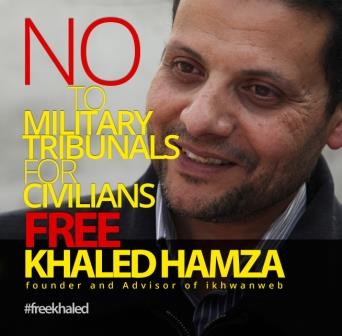
Posted in Human Rights |
|||||||||
|
|||||||||
|
|
|||||||||
| Related Articles | |||||||||
|
|
 Back to Homepage


 Facebook
  Digg
Digg  Yahoo
Yahoo  Del.icio.us
  reddit
  StumbleUpon
  Mixx
Mixx  Google


Twitter
Facebook
Most Viewed
Join Our Maillist
Video


|
© The Muslim Brotherhood All copyright and re-transport from the site of any material are allowed as long as the source mentioned |
