|
|||||||||
| :: Archive > MB in International press | |||||||||
|
Egypt steps up campaign against Muslim Brotherhood
With a wave of arrests and military trials, Egypt’s government is dramatically stepping up its campaign against the Muslim Brotherhood, the country’s most powerful opposition movement. It also has launched a new tactic: Going after the Islamic group’s money.
The government is trying to dismantle what it says is a financial network that feeds millions of dollars to the group through com
|
|||||||||
| Tuesday, February 20,2007 00:00 | |||||||||
|
|||||||||
|
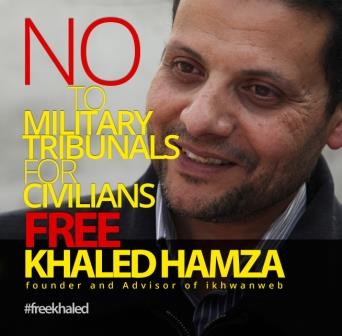
With a wave of arrests and military trials, Egypt’s government is dramatically stepping up its campaign against the Muslim Brotherhood, the country’s most powerful opposition movement. It also has launched a new tactic: Going after the Islamic group’s money. The government is trying to dismantle what it says is a financial network that feeds millions of dollars to the group through companies owned by wealthy members — everything from furniture stores to fast-food chains. That crackdown comes as President Hosni Mubarak, a key U.S. ally, is increasingly sounding the alarm about the Brotherhood, calling it a danger to the country’s security. Authorities accuse the group of trying to increase its power and even seeking to set up an armed militia. But the Brotherhood, which renounced violence in the 1970s, denies it is creating a military wing. Its deputy leader, Mohammed Habib, called the claims part of "a whole campaign of fear-mongering, aimed at marginalizing us." Last week, Egyptian security forces arrested 78 Brotherhood members in what appeared to be an attempt to cripple the group ahead of April elections for the upper house of Egypt’s parliament. Most of those arrested were potential candidates. In all, a total of about 300 members are in custody. In early February, Mubarak also ordered 40 other Brotherhood members — including its top financial figure, Khayrat el-Shater — put on trial before a military court on charges of money laundering and terrorism. Both sides call the face-off a struggle for democracy. Mubarak’s government says it is trying to defend the country from a movement that wants to impose Islamic rule. The Brotherhood "needs to answer a very important question: What sort of Egyptian state they want — a secular one or an Islamic one?" said Aly Eldin Helal, a top ruling party member. But the Brotherhood charges that Mubarak — who has held autocratic power for a quarter century — wants to eliminate the sole opposition movement that could challenge his regime if a fair vote were held. The Brotherhood and secular opposition groups accuse the 78-year-old president of trying to ensure his son, Gamal, succeeds him. The Brotherhood, which has been banned since 1954 banned but runs candidates as independents, made dramatic gains in parliament elections in late 2005, winning a fifth of the legislature’s seats. Egyptian human rights activists believe the Brotherhood’s showing then was a key reason why the United States has backed down somewhat on public pressure on Mubarak to enact democratic reform. Now the government is trying to push through what it calls its own reform package, including constitutional changes that would make it harder for the Brotherhood to participate in politics. The recent wave of arrests occurred after a December protest by the Brotherhood in which 50 young members appeared in military-style black uniforms and balaclavas — prompting government claims the Brotherhood was taking up arms. Soon afterward came the crackdown on the group’s cash flow. El-Shater, the movement’s No. 3 leader, was arrested along with two other Brotherhood businessmen, and a public prosecutor ordered the freezing of assets of 34 companies connected to members. That has highlighted the powerful financing the Brotherhood enjoys. El-Shater, for example, has an estimated wealth of around $87 million, according to Adel Abdel-Aleem, a former official in Egypt’s state security office who writes frequently about the group. Also arrested was businessman Hassan Malek, who owns a chain of furniture stores and textile factories. The Brotherhood’s resources also come from donations from its estimated 400,000 members — each donates 8 percent of his income each month. Brotherhood businessmen then invest those donations, including in apartment complexes, supermarket chains, textile factories and fast-food chains, according to Abdel-Aleem and Tharwat el-Kharabawi, a former Brotherhood member. El-Kharabawi, who left the group to try to form a moderate political party, told the Associated Press the movement spent about $10.5 million in the 2005 elections. The Brotherhood insists it still is committed to peaceful change, despite the recent government crackdown on its finances and string of arrests. But a leading moderate in the group, Abdel Moneim Aboul Fotouh, warned that those who feel hopeless about democratic change could turn violent. Last week’s arrests, he said, are "an indirect call by the regime for violent forces to become active, because it is crushing all the peaceful factions." Other Topics: Mubarak Sends MB Leaders To Military Tribunal! Related Topics: Egypt moves against Muslim Brotherhood Other Topics:
Prisoners of Conscience |
|||||||||
|
Posted in MB in International press , MB in International press , MB in International press , MB in International press |
|||||||||
|
|||||||||
|
|
|||||||||
| Related Articles | |||||||||
|
|
 Back to Homepage


 Facebook
  Digg
Digg  Yahoo
Yahoo  Del.icio.us
  reddit
  StumbleUpon
  Mixx
Mixx  Google


Twitter
Facebook
Most Viewed
Join Our Maillist
Video


|
© The Muslim Brotherhood All copyright and re-transport from the site of any material are allowed as long as the source mentioned |
