|
|||||||||
| :: Issues > Democracy | |||||||||
After Mubarak: Egypt And The Succession Issue
All eyes are turning towards Egypt and who will succeed Egyptian President Hosni Mubarak. Concerns over the President's health have increased since his gallbladder was removed in an operation in Germany in March 2010.
|
|||||||||
| Sunday, August 29,2010 11:29 | |||||||||
|
|||||||||
|
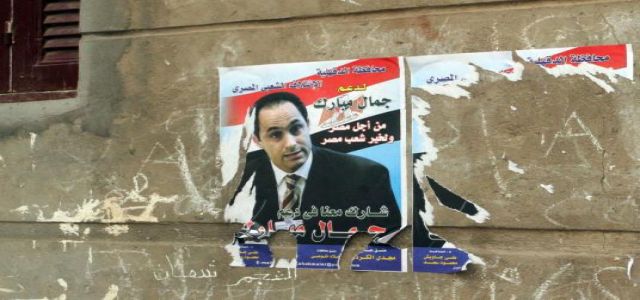
All eyes are turning towards Egypt and who will succeed Egyptian President Hosni Mubarak. Concerns over the President's health have increased since his gallbladder was removed in an operation in Germany in March 2010. The Popular Coalition for Supporting Gamal Mubarak launched a campaign to promote the nomination of the president's son in next year's elections. But millions of Egyptians have been wondering about the real force behind the movement. Last month marked the beginning of efforts to enhance the younger Mubarak's reputation by coalition members, who plastered tens of thousands of posters of his image with slogans urging the 47-year-old to follow in his father's footsteps. Observers, however, have noted that security forces have allowed the posters to stand, though the rules say campaigning cannot begin until shortly before the elections themselves, which are not until next year. It is significant to examine and estimate all candidates and Egypt’s post Hosni Mubarak rule and policy.
Mubarak has never appointed a vice president, and there is no political figure of comparable stature who stands out as an election possibility. Who succeeds him likely depends largely on the decision by Mubarak himself (unless he passes away suddenly), along with top figures within the ruling party, the military and the security forces. Ruling party candidates are virtually assured of victory in elections, which are usually plagued by reports of widespread vote fraud. Two elections are nearing in Egypt – the upcoming parliamentary elections in December 2010 and the presidential elections in September 2011. While visiting Italy in May, Mubarak deflected a question about the presidential elections and addressed the issue of succession by saying that “only God knows who will be my successor.” There are suggestions that a number of businessmen-politicians within the National Democratic Party (NDP) are keen on installing Gamal Mubarak as the next president because his financial ideology serves their personal interests. Gamal Mubarak is the deputy head of the party and leads its influential Policies Committee, directing Egypt's economic liberalization program. His core support comes from wealthy businessmen. But there is one important point-- Gamal, who did not rise through the ranks of the military like his father and previous presidents, would have less of a chance without his father's support and support from other key Egyptian constituencies such as the Egyptian military brass; an act that made the succession issue in Syria moot. It should be noted here that the Syrian Baath regime, like Egypt run by the military brass, was the first to implement a successful succession from father, Hafez Assad, to son, Bashar Assad. However, in Syria’s case, Assad senior brought his son from medical school in London and enrolled him in the Army and saw him rise through the ranks for several years before Bashar became present right after his father’s passing in 2000. Ever since that time leaders of several Arab republic ruled by former generals with the assistance of top military brass have contemplated repeating the Syrian experience. Pan-Arab media have written about alleged plans by the presidents of Yemen, Libya and Egypt to pass on the presidency to their sons. Until recently, talk about Gamal’s presidential aspirations were dubbed as rumors by Egyptian authorities and even denied by Gamal himself. Now it is almost official. There are specific arguments why Gamal Mubarak might not win the presidency. First: The military and state security establishment doesn’t see him as one of their own and subsequently would have little trust in him to look after their interests. Flush with money and connections from his business empire, Gamal is perceived by the military as a Western economic tiger bent on transforming Egypt to a market economy in which they will likely be deprived of their governmental patronage machine and perks. Gamal had tried to win over support of the military and intelligence officials by establishing joint-ventures with them, making them part of his business empire and giving them a taste of things to come when he becomes president. But many observers doubt this would be enough to win over all the top brass. Second; Egypt’s democratic opposition forces seem adamant on derailing Gamal Mubarak’s rise to the presidency. They want to establish a true representative government. As both the symbol and substance of his father’s dictatorship, stopping Gamal Mubarak brings added legitimacy to the opposition forces cause within Egypt and internationally. The opposition have been using the new media effectively to rally public support and organize demonstrations. If this continues the opposition could trigger a large wave of riots after the passing of Mubarak in order to prevent succession and possibly instate a new government system. Third: Gamal Mubarak does not project well amongst the masses in Egypt. Many see him as the font of corruption, greed and dynasty. Gamal’s election would not only antagonize the overwhelming majority of Egyptian society but strengthen the Muslim Brotherhood’s already considerable popularity as the Islamic alternative to authoritarian rule. Ironically, the convergence of interests between Egypt’s opposition forces and the military-security elite to neutralize Gamal Mubarak could lead to an unusual but tentative power sharing arrangement — one that could avert a bloody resolution of the succession crisis. Under other transition scenarios, General Suleiman will take Mubarak’s place as a caretaker until Gamal gains more experience and bolsters his credentials with Egypt’s security and military apparatus. At the age of 82, rumors of Mubarak’s failing health have persisted. Mubarak has ruled the country since the assassination of President Anwar Sadat in 1981, and approaching the end of his fifth consecutive presidential term has been an almost permanent fixture in the modern Egyptian state. Whether Mubarak dies this year or during another six-year term as president, change is inevitable and the speculative scenarios that follow are many. While many observers assume that Egypt’s domestic politics will experience deep changes after Mubarak’s death, other observers guess – and many in Israel worry – that Egypt’s international alliances could also shift in a post- Mubarak era. |
|||||||||
|
tags: Mubarak / Gamal Mubarak / Mubarak Regime / Ruling Regime / NDP / Egyptian Elections / ElBaradei / NAC / Kefaya / Gaza / Egyptian Opposition / Egyptian Muslim Brotherhood / Democracy in Egypt / Sadat / / Moderate Muslim Brotherhood / Egyptian Intelligence / Omar Suleiman /
Posted in Democracy |
|||||||||
|
|||||||||
|
|
|||||||||
| Related Articles | |||||||||
|
|
 Back to Homepage


 Facebook
  Digg
Digg  Yahoo
Yahoo  Del.icio.us
  reddit
  StumbleUpon
  Mixx
Mixx  Google


Twitter
Facebook
Most Viewed
Join Our Maillist
Video


|
© The Muslim Brotherhood All copyright and re-transport from the site of any material are allowed as long as the source mentioned |
